
MEDIA RELATIONS • RECONCILIATION • TRAUMA-INFORMED
Papal Visit
Service Areas: Media Relations & Public Relations
Client
Confederacy of Treaty No. 6 First Nations
Year
2022
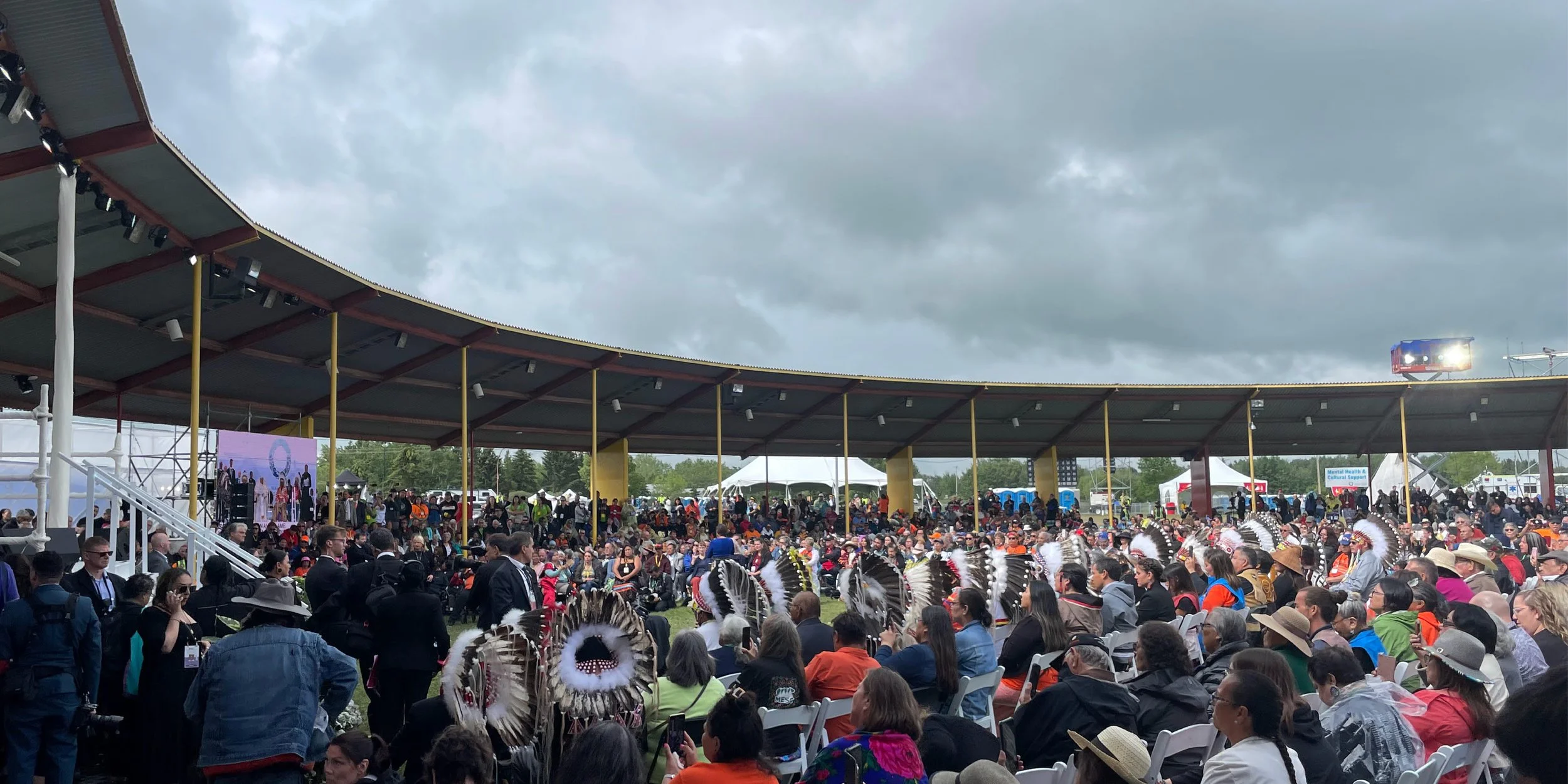
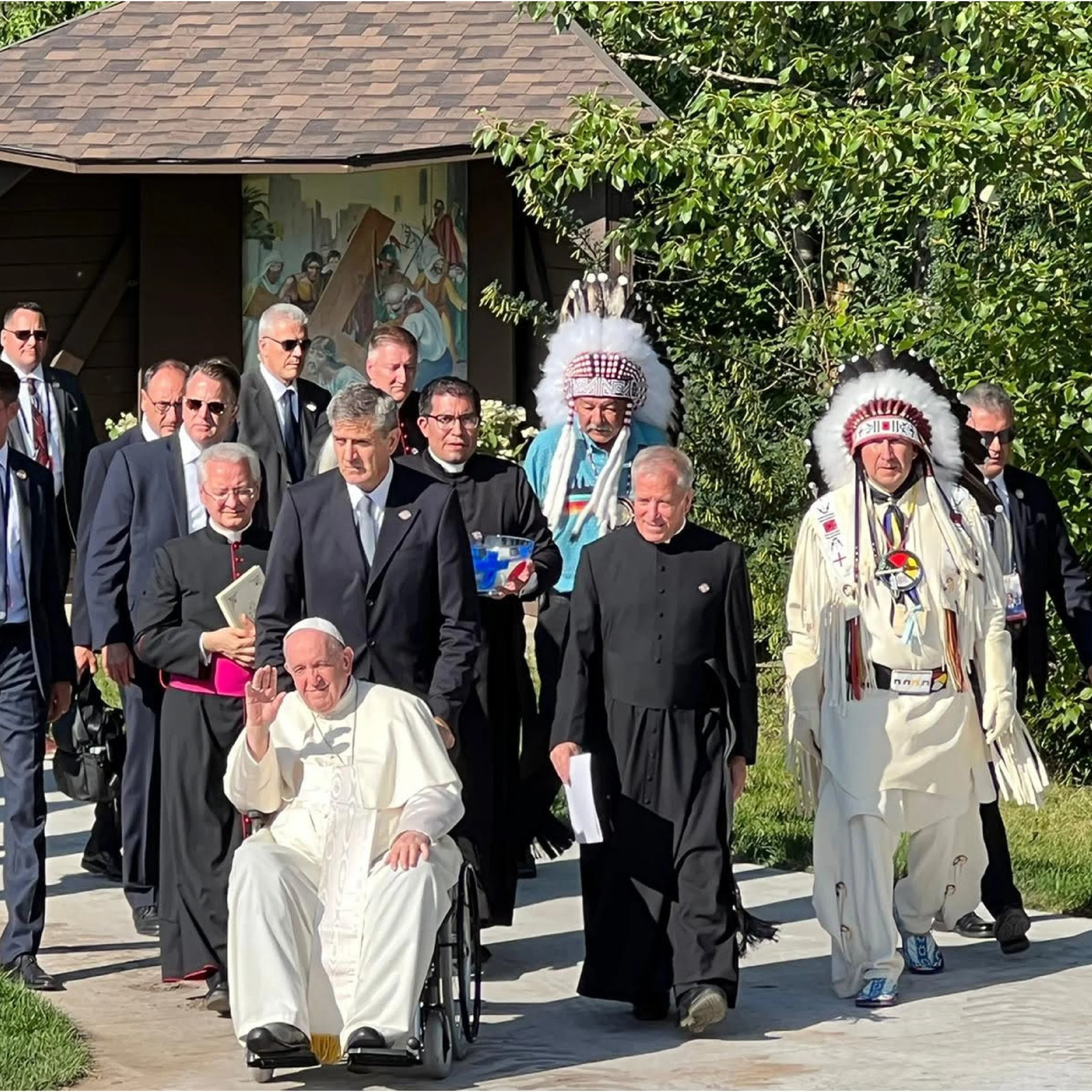
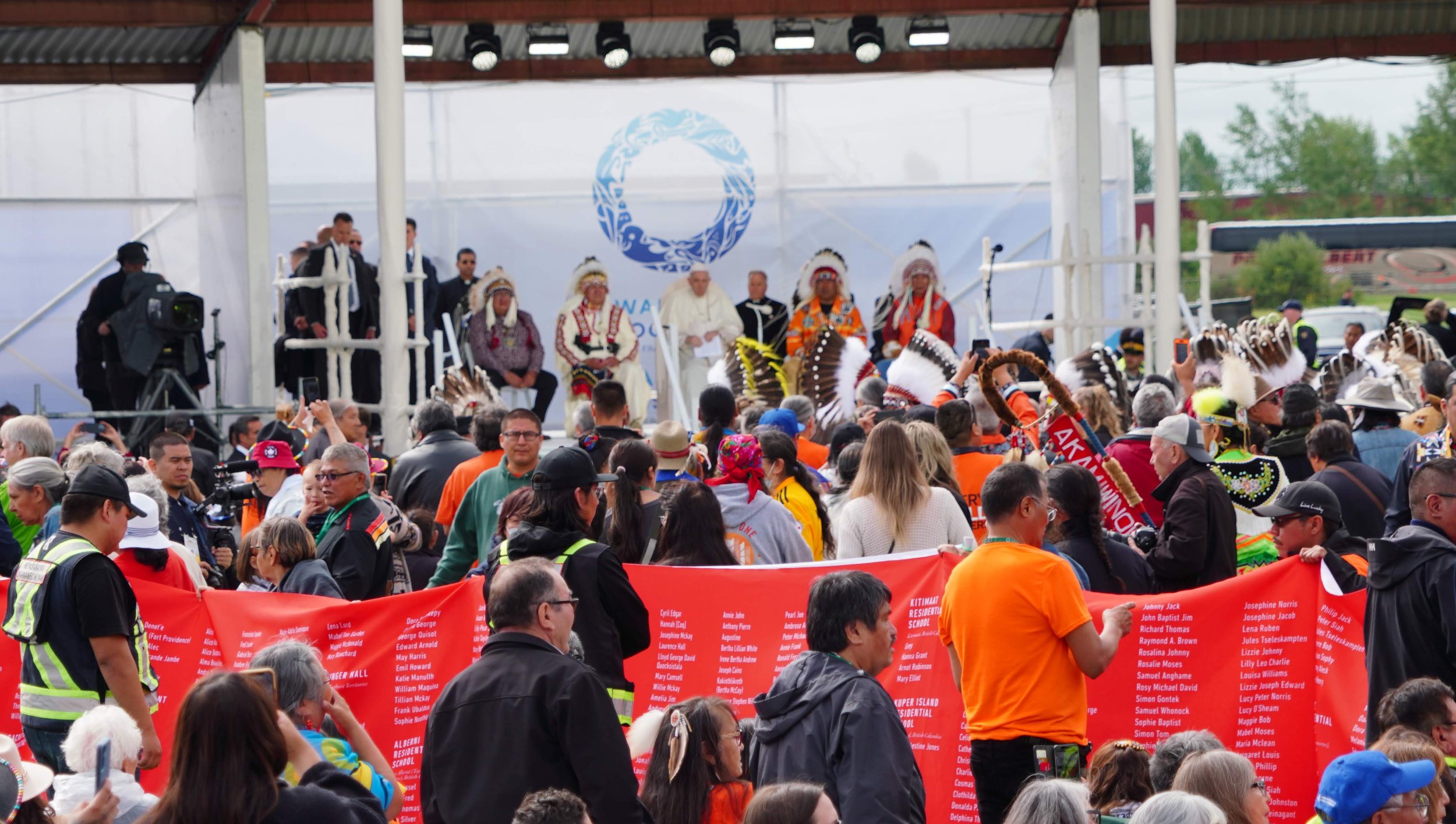
Following Pope Francis’ personal apology to Chiefs and Survivors at the Vatican in April 2022, he agreed to visit Canada. On May 12, 2022, the Vatican announced Pope Francis would be visiting Canada between July 24 and July 29, 2022, stopping in Edmonton, Québec City and Iqaluit. The purpose of the visit was for the Pope to apologize to Indigenous Peoples for the Catholic Church’s role in the Indian Residential School (IRS) system.
Pope Francis’ visit was a historical moment in the lives of Survivors who had been waiting decades for the Catholic Church to acknowledge its role in the genocide, abuse and colonization of Indigenous Peoples.

There has to be forgiveness if you want to put this pain behind and rebuild as a people. Survivors have identified that this is a necessary step. Only through forgiveness can we build new bridges and rebuild our communities.
-Chief George Arcand Jr.


Approach
It was our goal to create opportunities for First Nation leaders, Survivors and Indigenous community members to safely share their truths. Being aware of the challenges Indigenous Peoples have faced with international news outlets, we began planning by reviewing coverage of Indigenous leadership and Survivors who attended the Pope’s apology at the Vatican in April, 2022.
The media, as our primary audience, was provided tools, materials and structure during media interviews and news conferences. We identified our secondary audience as the global public — people who were not only unaware of residential schools, but also of Indigenous Peoples, our cultures and ways of being.
As we planned to communicate with our secondary audience, it became clear the Vatican Press Corps and international media lacked the tools and education to tell this story in a trauma-informed, respectful manner. Keeping that in mind, we drafted a Survivor-first strategy prioritizing Indigenous ways of knowing and being. We shared this document, titled Interviewing Indigenous Peoples: A Media Guideline, at a technical briefing with journalists covering the event prior to the Pope’s arrival.
The guideline provides information for journalists about respectively approaching and interviewing Survivors of the residential school system. It also includes information about stylistic guidelines informed by Elders and Indigenous academics — outside of the Canadian Press Stylebook paradigm. We submitted the guideline to the Vatican Press Corp, as well as every domestic and international outlet that visited Alberta to cover the event.
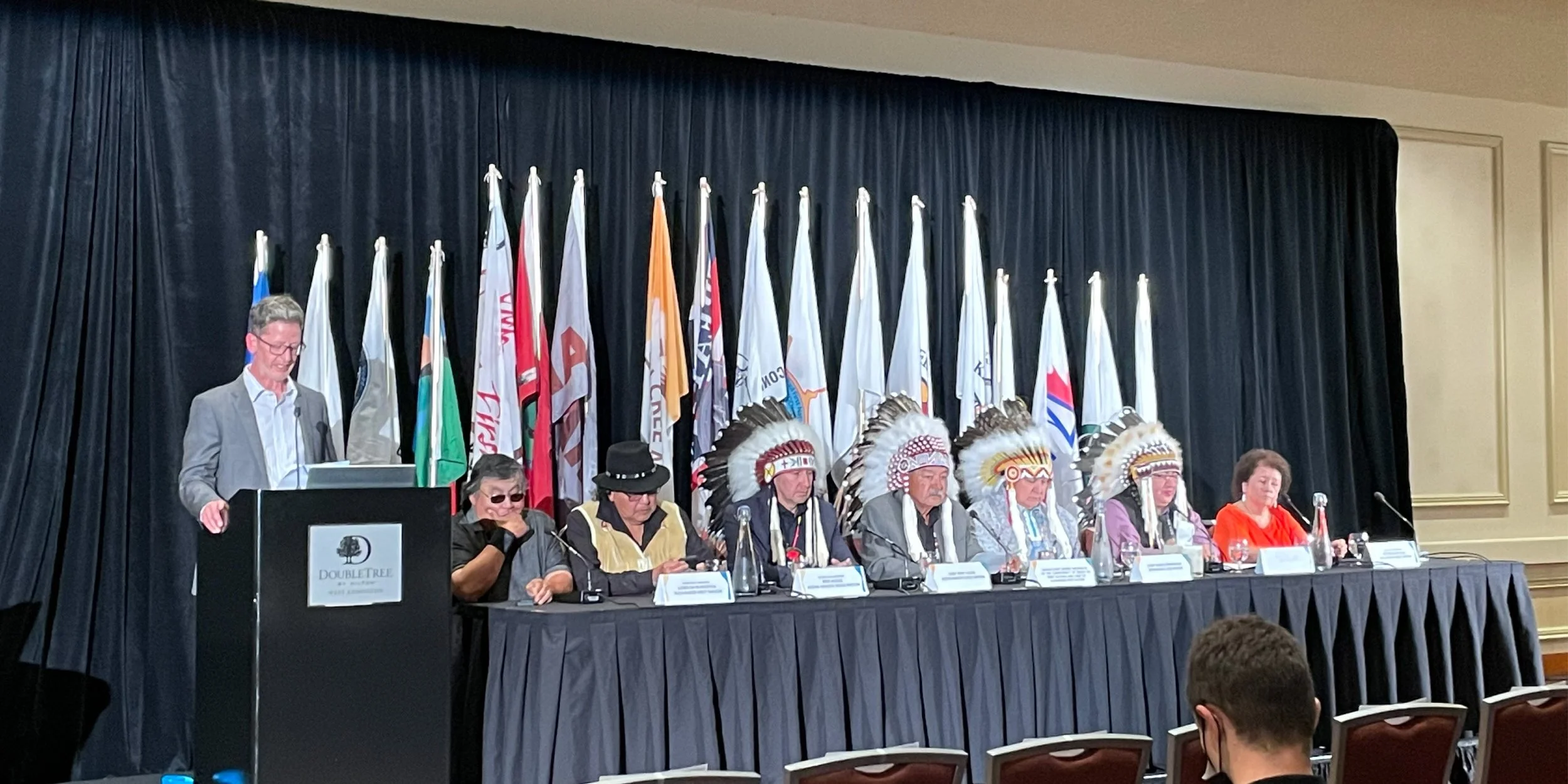
We met with Chiefs and Survivors to understand their needs and organized a number of news conferences and other media opportunities so they had an opportunity to share their truths with the world. As part of the strategy we also prepared Chiefs and Survivors to speak to the media by providing media training, coaching and preparing key messaging and speaking notes. We ensured Survivors and Chiefs had in-person support from our team during all interactions with the media. Acting as the primary media contact for all provincial, national and international media, we organized two large, live-streamed news conferences —with media invited in-person and virtually, providing an opportunity for Survivors and Chiefs to share their truths. Our team organized two media announcements and other one-on-one interviews with Chiefs and Survivors.

The Chiefs are charismatic, intelligent, amazing spokespeople. The world got to see how special they are — how special our People are. I think that was our goal — we wanted to make sure Chiefs were sharing strategically and our People had a voice. I also just wanted to help — they really needed helpers.
-Shani Gwin, pipikwan pêhtâkwan founder
Outcomes
Our engagement with the media — including news releases, statements from Chiefs and media advisories — reached audiences around the world and had a discernible impact on how global outlets cover stories about Indigenous Peoples.
On average, every piece of media content we released was sent to over 2000 journalists daily, with an average of a 50% open rate (the average open rate for emails in the public relations industry is 21.5%)
The news story with the highest reach was published July 20th by CTV News — Edmonton’s holy history: A look back at the city’s first Papal Visit. The story had an estimated potential online audience of 14.7 million viewers.
The broadcast story with the highest reach was by CTV National News on July 21st covering community preparations for the papal visits as well as the press conference held by Treaty No. 6 leadership and Survivors, with a potential audience reach of 3.55 million viewers.
Although it’s difficult to ascertain the long-term effects of such an important historical event, it’s important to recognize Survivors had been requesting the Pope to visit and apologize for decades. To this day, the implications of the Pope’s apology are still unclear for Survivors in regard to legal action and/or reparations from not only the Catholic Church, but the Government of Canada and the RCMP as well.
From pipikwan pêhtâkwan’s perspective, the impact of meeting the Confederacy of Treaty No. 6 First Nations objectives was clear: Survivors felt assisted, safe and encouraged to share their stories on a global stage.
Measuring and evaluating the success of this project qualitatively, we attracted coverage from major news outlets including Reuters, ABC News, Nation World News, Washington Post, Rome Reports, II Sismografo, Wall Street Journal, Vatican News, Al Jazeera, The New York Times, CNN, NPR and the BBC.