
Showing up and protecting our kin - the people, the land and ourselves
Written by Shani Gwin
Kinship is not just a social or familial connection; it’s an integrated system of care, access, and accountability. Kinship is the relational infrastructure that holds Indigenous Peoples and communities together.
Our family networks—where a cousin is a lawyer and an Auntie makes a call, or a community member refers a friend—are rooted in how we define our identity. Often we define ourselves by who we are connected to - who are your parents, grandparents and what are your connections to specific communities and the land. So, when we ask for help, you’re not often asking a stranger or acquaintance you met at a conference, you’re asking a relative. Often, not always nor should it be expected, those kinship relations are offered pro bono or at a heavy discount as an act of reciprocity and a recognition of shared history and connection.
Our kinship-based system is vital to economic and social opportunity. In Indigenous business and community networks, referrals and collaboration are built through established relationships, and competition is often replaced by mutual support. Often you’re just a phone call away from professional athletes, actresses, Elders, Knowledge Keepers, doctors, lawyers and public figures who are community members. And what is so beautiful is that these community members understand that their success is directly linked to the well-being of the people who raised them and the communities that claim them. Many of these relations are what people might call a household name, or are people you might feel intimidated to reach out to for their help. But not for your kokum - they will call and most of the time that household name answers. They show up as often as they can.
The kinship system is the Aunties, Uncles, Kokums and Mosoms who facilitate the introductions. It’s the community that rallies around someone like Shiyazh Pete. When an Indigenous person achieves something, the community celebrates. And boy is it beautiful when we show up for our people. I can feel the strength in our energy - our presence is power in itself. It’s not performative visibility, it’s showing up when it matters.
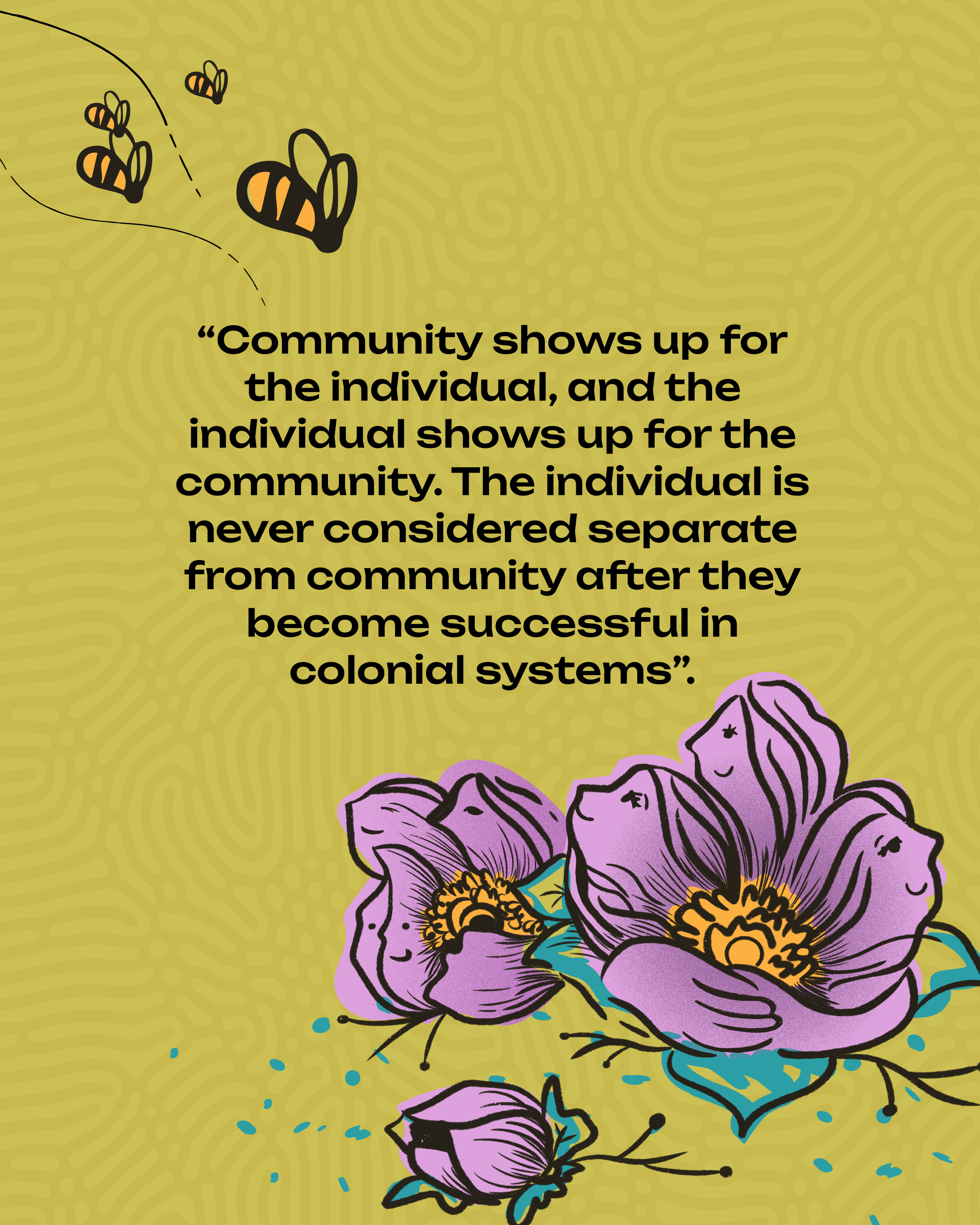
I believe our presence also communicates a responsibility to ensure those community members stay grounded and connected to us. On the flip side, we as a community also hold a responsibility to care for that person, support and protect them so they can continue to achieve and break barriers. As a collective, most of us approach this with care and protection because our networks are a source of strength, however relying on kinship for professional services can sometimes blur boundaries. What keeps these connections strong and balanced is through protection. These kinship exchanges have to remain consensual and respectful of the community member’s capacity. True accountability in our communities means our kinship connections providing help aren’t being exploited or overburdened by the weight of expectation. The beauty is in the balance. Community shows up for the individual, and the individual shows up for the community. The individual is never considered separate from community after they become successful in colonial systems.
When we reach out to our networks, we are entering a space of trust. We have to ground ourselves in humility. Know who you are inviting, why, and respecting their timelines allows our kinship networks to function without strain. It ensures that the relationships remain healthy and that the "help" is truly a gift of connection rather than a transaction that devalues the professional or the relationship.
When folks say we are resilient as a people - it’s not what we’ve overcome or what we’ve gone through that makes us resilient. The foundation of our strength is our kinship networks that are nurtured and maintain our wellbeing, that help us keep going. We show up for each other when it really matters. This is why we have survived and continue to thrive. That is what is resilient, our family ties and our relationship with the land were never abolished as planned. When we acknowledge our identities are woven through our relations, we understand that our success is collective. We are not isolated individuals climbing a ladder; we are all part of a beautiful and delicate web holding each other up.
When we speak of Indigenous Peoples, we speak of people who carry their families and communities with them, wherever they go. That power cannot be replicated by any other system, and it is a strength we must protect, nurture and respect.
